AI

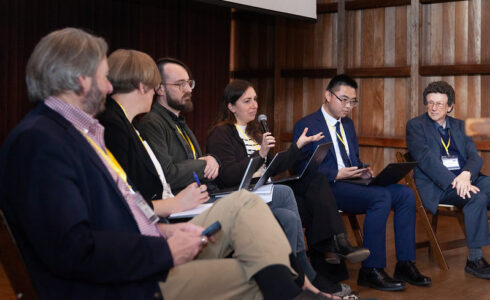
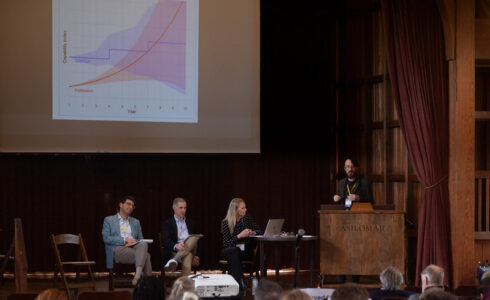
Allison Berke, Chemical and Biological Weapons Nonproliferation Program Director at the James Martin Center for Nonproliferation Studies, speaks at the Asilomar conference on artificial intelligence and nuclear and biological security organized by the center in April. Other panelists, from left, are: Douglas B. Shaw, Zoe Gastelum, Stephen Herzog, Yanliang Pan, and William C. Potter. Photo credit: Eduardo Fujii.

Anticipatory Arms Control for the AI Age

CNS researchers publish in Arms Control Today on why the Asilomar Process is needed for the new generation of AI and WMD restraint.
Asilomar AI Conference

The Asilomar Principles for Governing AI Applications in Nuclear and Biological Security

CNS releases principles for its landmark Asilomar Process, aiming for sustained cross-sector dialogue on early AI governance.
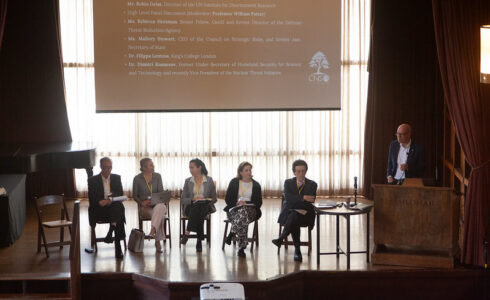
In April, more than 100 experts gathered at California’s Asilomar Conference Grounds to discuss how AI may affect nuclear and biological weapons. Image: Eduardo Fujii

AI Is Changing Biological and Nuclear Risks; Governance Must Change Accordingly

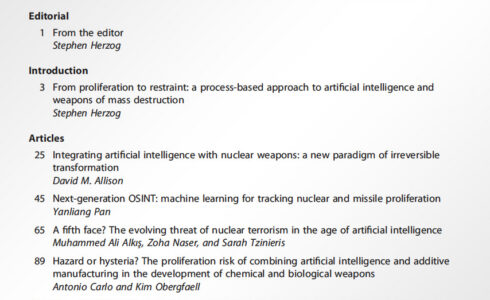
Bulletin of the Atomic Scientists publishes “Asilomar Principles for Governing AI Applications in Nuclear and Biological Security.”
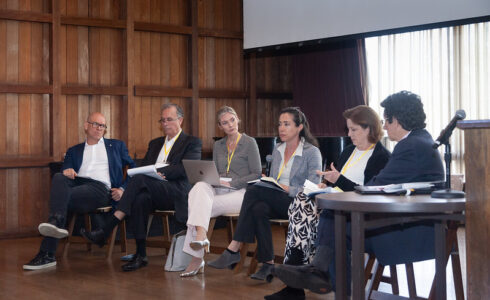
Asilomar Conference speakers

CNS Organizes Iconic Asilomar Conference on AI and WMD

On April 8-9, 2026, CNS convened a conference titled “Silicon, Swords, and Ploughshares: The Perils and Promise of AI in the Nuclear and Biological Domains.”
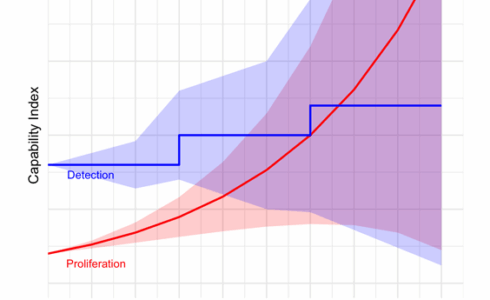
Chart showing exponential growth

CNS AI and Nuclear Proliferation Research Wins Best Paper 2025 Award

Dr. Stephen Herzog’s work is recognized by the Society for Risk Analysis.
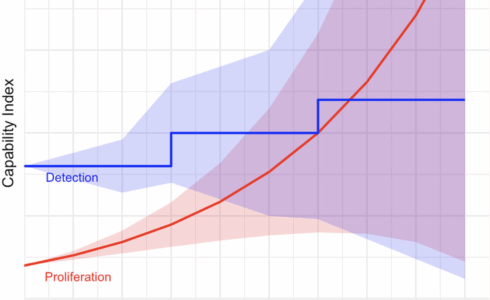
graph of capability index by year.

Artificial Intelligence and Nuclear Weapons Proliferation: The Technological Arms Race for (In)visibility

Dr. Stephen Herzog co-authors one of the first academic articles exploring how AI might affect the spread of nuclear weapons.
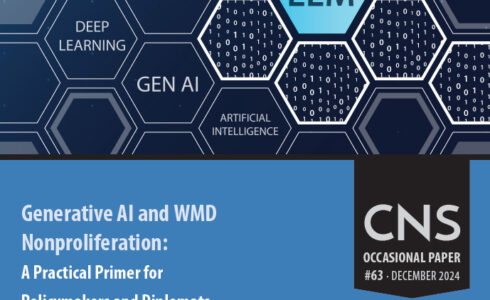
Occasional Paper #63 cover.

OP63: Generative AI and WMD Nonproliferation: Why Diplomats and Policymakers Need to Pay Attention Now and Develop AI Literacy

Policymakers and diplomats must urgently develop AI literacy to harness its benefits while safeguarding against potential misuse.

James Martin Center for Nonproliferation Studies (CNS)

Author Interview: AI, Chemistry, and the Threat of Chemical Weapons

An exclusive interview with Dr. Ryan Stendall, a chemist and AI safety researcher.

Bulletin of Atomic Scientists

Nuclear energy could power the AI boom—but only if proliferation risks are minimized

The United States should prioritize support to industry players that have minimized the proliferation risks of their prospective technology.

Neil Perry

Applying Cryptography to National Security

Neil Perry’s talk explores the application of cryptography to several critical areas of national security.