Stephen Herzog Articles

Cover of The Nonproliferation Review (NPR)

From Proliferation to Restraint: A Process-Based Approach to Artificial Intelligence and Weapons of Mass Destruction

Stephen Herzog’s new essays lays out the many ways that AI is fundamentally reshaping the politics surrounding WMD.
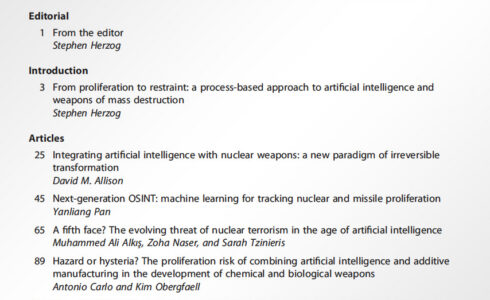
The Nonproliferation Review Publishes Special Issue on Artificial Intelligence and Weapons of Mass Destruction

CNS flagship refereed journal pushes forward the emerging literature on AI and WMD.
Screenshot of article.

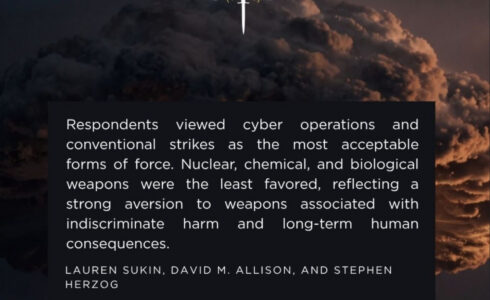
What Makes a Weapon Too Horrific to Use?

Dr. Stephen Herzog and co-authors discuss why the U.S. public supports the use of some weapons but recoils at others.
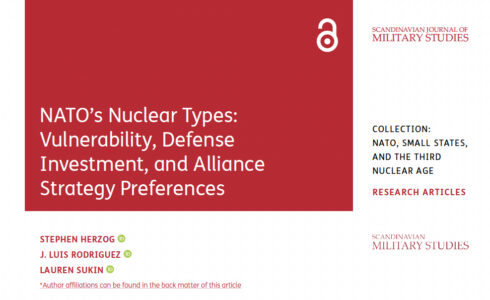
NATO’s Nuclear Types: Vulnerability, Defense Investment, and Alliance Strategy Preferences

NATO’s Nuclear Types: Vulnerability, Defense Investment, and Alliance Strategy Preferences

Dr. Stephen Herzog and co-authors investigate the very different strategies that NATO member countries take while under the same U.S. nuclear umbrella.
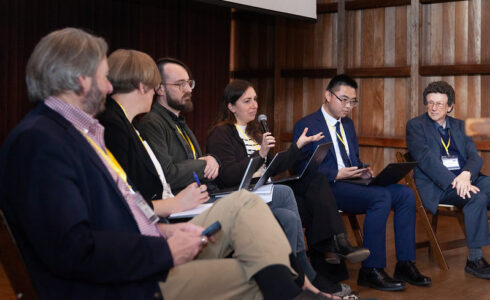
Allison Berke, Chemical and Biological Weapons Nonproliferation Program Director at the James Martin Center for Nonproliferation Studies, speaks at the Asilomar conference on artificial intelligence and nuclear and biological security organized by the center in April. Other panelists, from left, are: Douglas B. Shaw, Zoe Gastelum, Stephen Herzog, Yanliang Pan, and William C. Potter. Photo credit: Eduardo Fujii.

Anticipatory Arms Control for the AI Age

CNS researchers publish in Arms Control Today on why the Asilomar Process is needed for the new generation of AI and WMD restraint.
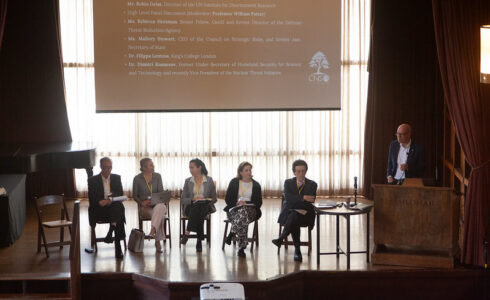
Asilomar AI Conference

The Asilomar Principles for Governing AI Applications in Nuclear and Biological Security

CNS releases principles for its landmark Asilomar Process, aiming for sustained cross-sector dialogue on early AI governance.
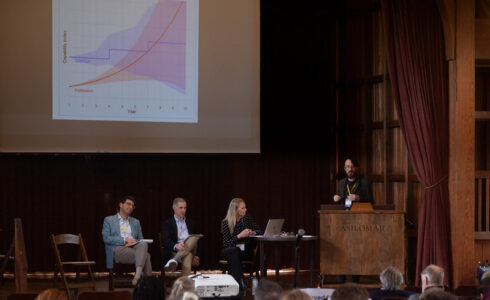
In April, more than 100 experts gathered at California’s Asilomar Conference Grounds to discuss how AI may affect nuclear and biological weapons. Image: Eduardo Fujii

AI Is Changing Biological and Nuclear Risks; Governance Must Change Accordingly

Bulletin of the Atomic Scientists publishes “Asilomar Principles for Governing AI Applications in Nuclear and Biological Security.”
Cover of the Journal of Peace Research

Too Brutal for War: Comparing Rationales for Weapon Taboos

Dr. Stephen Herzog and co-authors systematically analyze “taboos” related to six types of weapon systems.

Closeup of the cover

After Nuclear Deterrence: Insights and Uncharted Frontiers

Dr. Stephen Herzog and colleagues provide insights into the recently completed MacArthur Foundation-funded Beyond Nuclear Deterrence Working Group.

Graph titled "Public Entanglement on Nuclear Deterrence and Nuclear Disarmament Views"

Rethinking the Deterrence-Disarmament Dichotomy: The Complex Landscape of Global Nuclear Weapons Preferences

Dr. Stephen Herzog and co-authors conducted––and published research on––the largest academic public opinion survey on attitudes toward nuclear weapons to date.