
September 24, 2026
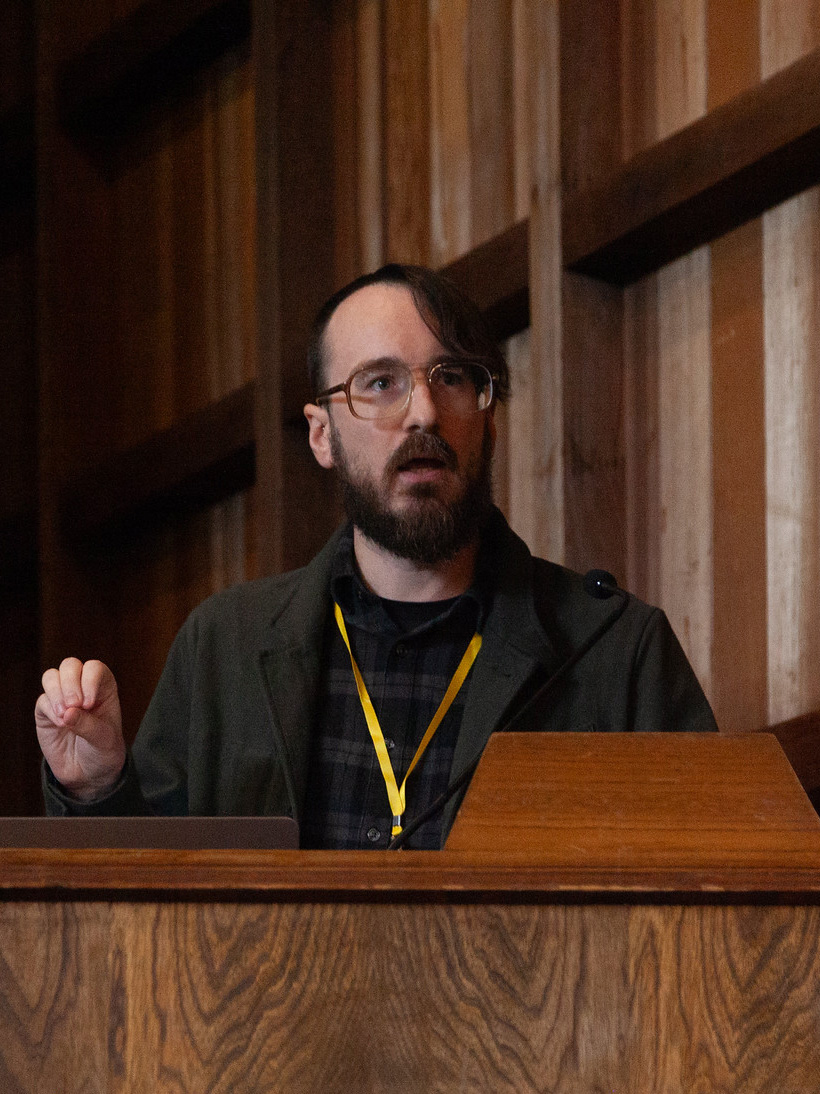
Professor Stephen Herzog
Douae Loukili ’27 and Aria Saines ’27, who both spent the summer as Undergraduate Fellows at the Center for Nonproliferation Studies (CNS) in Monterey, recently spoke to Dr. Stephen Herzog. Stephen is Professor of the Practice in International and Global Studies and Director of the new CNS Middlebury office, located at 46 South St. They discussed CNS activities, opportunities for students to get involved, and more. You can read their conversation below.
DL and AS: How would you describe CNS and the issues its researchers examine?
SH: CNS is a Middlebury College research and education center focused on preventing the spread and use of the world’s most dangerous weapons. It is something you will not find at any other liberal arts college in the country. Our staff thinks every day about risks from nuclear, biological, and chemical weapons. We were founded in 1989, and CNS has been part of the Middlebury family since 2010. It has grown into the world’s largest nongovernmental organization devoted exclusively to nonproliferation.
Our researchers ask practical questions, though academic theory always underlies them. So, for instance: What might be happening at a suspected North Korean nuclear facility? How can governments verify a new arms control agreement? Could artificial intelligence (AI) help someone develop a biological weapon, and what new governance arrangements might prevent that?
Our headquarters is in Monterey, California, and we have offices in Vermont; Washington, DC; and Vienna, Austria. That gives us connections to technology companies, policymakers, and international organizations worldwide. But training the next generation of experts is at the very heart of our mission. Frankly, we are over the moon to be working with talented Middlebury undergraduate students on these issues.
DL and AS: What inspired CNS Vermont, and what can the Middlebury community expect?
SH: CNS Vermont is less a new arrival than a deepening of a longstanding Middlebury relationship. Many Middlebury undergraduates have participated in our research fellowships and internships in Monterey and Washington, and this summer we launched an internship program here in Vermont. Our staff members have also taught J-Term courses on the Middlebury campus for years. The Vermont office is about finally making these opportunities part of everyday life at the College.
I live in Vermont again now, after spending the height of the pandemic in Vergennes. And I am here to help students explore new global security topics, connect their academic training to policy writing and presentation skills, and think about future careers. You don’t have to be in my classes to meet with me, so just drop me a line!
Nuclear weapons policy and AI governance can feel distant and sometimes trigger feelings of helplessness. But the stakes can be catastrophic, or even existential. I want to make these issues accessible while maintaining the kind of first-rate liberal arts education that teaches students how to think, not what to think. That combination is one of the things that makes Middlebury such an exciting place to do this work.
This year I’m teaching two sections of a half-credit nonproliferation policy lab, a J-Term course on the Russia–Ukraine war and nuclear order, and a new non-technical course on emerging technologies and global security (AI, quantum computing, commercial space tech, drones, and more). These courses and our other programs are open to students of all majors, which reflects the broader field. For example, negotiating a treaty involves politics and international relations, but verifying whether countries are following it can draw on computer science, physics, chemistry, geophysics, and more. Beyond the classroom, we’ll offer visiting speakers; paid research positions; internships; opportunities to attend international meetings; and chances to connect with our Monterey, Washington, and Vienna offices.
We’ll also have an open house on October 1, from 4:30 to 6:30 PM, at 46 South Street. Students, faculty, staff, and our Vermont neighbors are all welcome!
DL and AS: What does nonproliferation mean in your own research, and how will you pursue it at Middlebury?
SH: Nonproliferation means preventing the spread of nuclear weapons and other weapons of mass destruction (WMD). My research also examines arms control and disarmament. Generally speaking, I want to understand how countries can reduce nuclear dangers, particularly when they deeply distrust one another.
Part of that involves studying treaties and how we can design agreements and verify that governments are honoring their commitments. I also use surveys to understand what publics and government officials around the world think about the bomb. This research shows that people can support relying on nuclear weapons today while also favoring their eventual elimination. That may leave considerably more room for creative diplomacy and dialogue than policymakers often assume.
Increasingly, I’m examining how AI might help countries develop weapons or help others detect those activities. At CNS, I am drawing on this work as one of the organizers of the Asilomar Process, which brings frontier AI labs, government officials, international organizations, and research institutes into the same room to think about how early choices might prevent AI models from increasing WMD threats.
At Middlebury, I have already begun involving interns and research assistants in these projects. CNS experts do academic research and policy analysis, brief officials, and communicate with the public. I hope that students will get to try out different parts of that work, whether they are considering careers in government, at think tanks, in academia, or elsewhere.
DL and AS: What first drew you to the field, and what experiences shaped your career?
SH: Well, I was born on a U.S. naval nuclear submarine base in Connecticut, grew up reading lots of books about military strategy and technology, and was fortunate enough to have WMD nonproliferation as my first topic as a high school policy debater. So these issues have been with me for a long time.
That said, when I was an undergraduate at Knox College in Illinois, I initially had pink hair, a dozen facial piercings, and wasn’t sure what I wanted to do professionally, like many students. I am still the same person, but I figured out what makes me tick professionally. An attentive professor connected the dots between my classroom performance and a career path in the WMD field. Without her, I don’t know if I would have ever discovered my current profession. It is not lost on me what a difference a caring educator can make. I now design courses around many of the things I wish I had encountered as a student.
Before pursuing my Ph.D. in Political Science at Yale, I did an M.A. in Security Studies at Georgetown and worked at the Federation of American Scientists and as a nuclear arms control official for the U.S. Department of Energy’s National Nuclear Security Administration. That work took me from the Caucasus and Central Asia to the Middle East and Southeast Asia, including as a junior member of delegations in diplomatic and technical exchanges on nuclear agreements.
My career has since taken me through Harvard and ETH Zurich in Switzerland, and now to Middlebury. Moving between government and universities has made me especially interested in research that can inform policy choices. It is also one reason Middlebury is such a natural fit for me, because rigorous scholarship, small-group teaching, and helping students figure out what they can do with their education all matter here.
DL and AS: What has working in this field looked like for you over the past few months?
SH: Cliché as it is to say, there has literally never been a dull moment. This year, I helped organize a conference at California’s Asilomar Conference Grounds that brought together more than 100 experts to discuss AI’s implications for nuclear and biological weapons. We are now working at CNS to turn those conversations into practical approaches to governing these technologies.
This year, I’ve also taught nuclear policy to officials at NATO in Brussels; briefed AI laboratories in Silicon Valley; attended a Vatican-hosted assembly of Nobel laureates addressing AI-driven nuclear risks at the Pope’s summer residence; spoken at the United Nations in New York; discussed innovative new treaty verification techniques at U.S. national laboratories in New Mexico; talked about emerging technology controls at workshops across Asia; and presented research at places including Harvard, Oxford, UPenn, and Uppsala University in Sweden.
Between trips, I’ve been preparing my Middlebury courses, working with student researchers, publishing academic and policy work, and occasionally speaking with the media. I’m also the editor of our CNS academic journal, The Nonproliferation Review, where we recently published a special issue on AI and WMD.
For all the travel and specialized subject matter, my job pretty much boils down to reading closely, asking good questions, weighing evidence, and trying to explain complicated problems clearly. Those are exactly the kinds of skills Middlebury students are already developing, which is why I think they can contribute so much to this field. And I could not be happier to be here.


