
Director, Eurasia Nonproliferation Program

[email protected]
Berlin, Germany
Areas of Research
- Russia’s foreign and security policy
- Russia’s approaches to arms control and non-proliferation
- Arms control and non-proliferation in the Middle East
- Russia’s defense cooperation with China, DPRK and Iran
Background
Dr. Hanna Notte is the director of the Eurasia Nonproliferation Program at the James Martin Center for Nonproliferation Studies in Monterey, California, and a senior associate (non-resident) with the Europe, Russia, and Eurasia Program at the Center for Strategic and International Studies. She’s also an associate fellow with the Kennan Institute. Her expertise is in Russian foreign policy, the Middle East, and arms control and nonproliferation.
Notte previously worked with the Shaikh Group, a nongovernmental organization focused on informal diplomacy in Middle East conflicts, supporting its engagement with Russia. During her doctoral studies, she was a visiting researcher with the Institute of Oriental Studies of the Russian Academy of Sciences and the Carnegie Moscow Center.
Based in Berlin, her writing has appeared in outlets such as The Atlantic, the Financial Times, Foreign Affairs, the New York Times, War on the Rocks, and ZEIT Online, among others. She is the coauthor of Death Dust: The Rise, Demise, and Future of Radiological Weapons Programs (Stanford University Press, 2023). Notte is a regular guest on conference panels and podcasts produced by leading U.S. and European think tanks. Her book about Russia’s global foreign policy since the full-scale invasion of Ukraine, We Shall Outlast Them: Putin’s Global Campaign to Defeat the West, is forthcoming with W. W. Norton & Company in August 2026.
Education
Dr. Notte holds a doctorate and MPhil in International Relations from Oxford University and a BA in Social and Political Sciences from Cambridge University.
CNS Work
- Putin’s Ukraine obsession has blinded him to dangers at home
 Putin’s obsession with Ukraine has made him blind to the real dangers to Russia, lurking abroad and at home.
 - Containing Global Russia
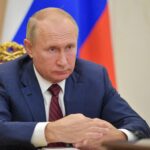 Contending with Russia’s efforts to upend the international order and to advance its own integration projects will be very difficult.
 - Turning Back the (Doomsday) Clock: Lessons (To Be) Learned in Nuclear Security
 Hanna Notte took part in a panel discussion at the Munich Security Conference.
 - Death Dust: The Rise, Decline, and Future of Radiological Weapons Programs – CISAC Stanford
 Death Dust explores the largely unknown history of the rise and demise of RW—sometimes portrayed as a “poor man’s nuclear weapon”—through a series of comparative case studies across the United States, the Soviet Union, the United Kingdom, Egypt, and Iraq.
 - Russia’s Dangerous New Friends
 Article on Russia’s relationship with the axis of resistance, to balance ties with Arab countries, including Israel, its encouragement of anti-American activities among Iran-backed groups, and the U.S. challenge to counteract by addressing conflicts and disrupting the partnership between Russia and the axis.
 - Russia, the Global South, and Multilateral Nuclear Diplomacy After the Invasion of Ukraine
 The seminar focuses on a recently concluded study on the impact of the Russo-Ukrainian war on the international nuclear negotiating forums and governance bodies (the IAEA, NPT review process and UN First Committee).
 - Death Dust: The Rise, Decline and Future of Radiological Weapons Programs
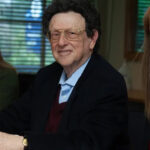 This seminar focuses on the findings of the recently published book “Death Dust: The Rise, Decline and Future of Radiological Weapons Programs.”
 - Hanna Notte Selected for the Munich Young Leaders 2024CNS’s Hanna Notte will be a featured speaker on a panel with Graham Allison at the Munich Security Conference.
- Russia’s Growing Support for Iran and North Korea
 Podcast: CNS expert Hanna Notte is interviewed on the podcast, Thinking the Unthinkable with Ankit Panda.
 - Why the World Should Still Worry About Dirty BombsDespite attempts to ban radiological weapons, challenges persist in achieving consensus, highlighting the necessity for global collaboration, legal restraints, nonproliferation commitments, and public education to deter their proliferation.
Articles and Activities
- How Ukraine Became a World War
- Russia is weighing the costs and benefits of retaliation
- Containing Global Russia
- Russia’s Dangerous New Friends
- Podcast interview: Russia’s Growing Support for Iran and North Korea
- Is Moscow the Big Winner from War in the Middle East?
- Putin Is Getting What He Wants
- Russia and the Global South
- Russia: A Global Outcast or Still a Desirable Partner?
- What the Israel-Gaza conflict means for Ukraine
- What Role Does Russia Have To Play In Hamas’s Invasion Of Israel? Q&A With Expert Hanna Notte
- US-Russian Relations Can Still Get Worse
- Challenges and Prospects for Further U.S.-Russian Nuclear Arms Control
- Interview: Hanna Notte on Russia in the Middle East After Ukraine
- Dr. Hanna Notte speaks at Lennart Meri Conference in Tallinn
- Russia’s Invasion of Ukraine – The Iran Nuclear Price Tag


