
 Director of the CNS Vermont Office & Professor of the Practice

[email protected]
Middlebury, VT
802.443.6697
@HerzogSM
Areas of Research
- Global nuclear order and multilateral nuclear governance
- Nuclear arms control verification
- Disarmament and moving beyond nuclear deterrence
- Public opinion on nuclear weapons and nuclear energy
- Emerging and disruptive technologies
Background
Dr. Stephen Herzog is the Director of the Vermont Office of the Center for Nonproliferation Studies (CNS) at Middlebury College and Professor of the Practice in International and Global Studies. He is the Editor-in-Chief of the peer-reviewed journal The Nonproliferation Review, an Associate of Harvard University’s Project on Managing the Atom, and a Fellow of the Yale Nuclear Security Program. His research focuses on nuclear arms control, nonproliferation, disarmament, and the intersection of artificial intelligence (AI) and nuclear weapons. At Middlebury, Dr. Herzog leads CNS academic programming on the campus and teaches and mentors students in global security and public policy analysis.
Prior to joining Middlebury, Dr. Herzog was a Lecturer and Senior Researcher in Nuclear Arms Control at the Center for Security Studies of ETH Zurich, the Swiss Federal Institute of Technology. He has also been a Stanton Nuclear Security Fellow at the Harvard Kennedy School’s Belfer Center for Science and International Affairs. Between 2022 and 2025, he was Academic Co-Chair of the Beyond Nuclear Deterrence Working Group for Harvard and the MacArthur Foundation. Before his doctoral studies, Dr. Herzog was a nuclear arms control verification official at the U.S. Department of Energy’s National Nuclear Security Administration and also worked at the Federation of American Scientists. He has worked, researched, and traveled in over 100 countries.
Dr. Herzog’s research is published in Contemporary Security Policy, Energy Research & Social Science, the European Journal of International Security, International Security, the Journal of Conflict Resolution, the Journal for Peace and Nuclear Disarmament, the Journal of Peace Research, the Naval War College Review, Perspectives on Politics, Risk Analysis, Survival, The Journal of Politics, and The Nonproliferation Review. His public affairs commentary has been featured in outlets including Arms Control Today, the Bulletin of the Atomic Scientists, the Financial Times, Foreign Policy, Science, The National Interest, The Washington Post, and War on the Rocks. He co-edited Atomic Backfires: When Nuclear Policies Fail (MIT Press, 2025). His article on the nexus of AI and nuclear weapons proliferation won a 2025 Best Paper Award from the Society for Risk Analysis.
Education
Dr. Herzog holds a B.A. in International Relations from Knox College, an M.A. in Security Studies from the Edmund A. Walsh School of Foreign Service at Georgetown University, and an M.A., M.Phil., and Ph.D. in Political Science from Yale University.
Selected Writing
- From Proliferation to Restraint: A Process-Based Approach to Artificial Intelligence and Weapons of Mass Destruction
- Anticipatory Arms Control for the AI Age
- NATO’s Nuclear Types: Vulnerability, Defense Investment, and Alliance Strategy Preferences
- Too Brutal for War: Comparing Rationales for Weapon Taboos
- Dual-Track Nuclear Disarmament: Institutional Design of the Treaty on the Prohibition of Nuclear Weapons
- Rethinking the Deterrence-Disarmament Dichotomy: The Complex Landscape of Global Nuclear Weapons Preferences
- Atomic Backfires: When Nuclear Policies Fail
- Atomic Responsiveness: How Public Opinion Shapes Elite Beliefs and Preferences on Nuclear Weapon Use
- Artificial Intelligence and Nuclear Weapons Proliferation: The Technological Arms Race for (In)visibility
- Layered Verification: Irreversible Nuclear Disarmament and Highly Latent Nuclear States
- Winning Hearts and Minds? How the United States Reassured During the Russo-Ukrainian War
- The Trilateral Dilemma: Great Power Competition, Global Nuclear Order, and Russia’s War on Ukraine
- NATO and Emerging Technologies—The Alliance’s Shifting Approach to Military Innovation
- The Altered Nuclear Order in the Wake of the Russia-Ukraine War
- Under the Umbrella: Nuclear Crises, Extended Deterrence, and Public Opinion
- Beyond Nuclear Deterrence
- The War in Ukraine and Global Nuclear Order
- Durable Institution Under Fire? The NPT Confronts Emerging Multipolarity
- Antinormative Messaging, Group Cues, and the Nuclear Ban Treaty
- Backchannel Non-Proliferation: Militarily Non-Aligned States and Nuclear Diplomacy
- The First TPNW Meeting and the Future of the Nuclear Ban Treaty
- Public Opinion on Nuclear Energy and Nuclear Weapons: The Attitudinal Nexus in the United States
- Japanese Public Opinion, Political Persuasion, and the Treaty on the Prohibition of Nuclear Weapons
- Correspondence: Clandestine Capabilities and Technological Diffusion Risks
- “What About China?” and the Threat to US–Russian Nuclear Arms Control
- The Nuclear Fuel Cycle and the Proliferation “Danger Zone”
- A Way Forward with North Korea: The Comprehensive Nuclear-Test-Ban Treaty
- The Nuclear Test Ban: Technical Opportunities For the New Administration
CNS Work
- How Nuclear Security Can Help Bring the US and China Together on AI
 Dr. Stephen Herzog proposes a 6-month U.S.–China pilot to test if AI can improve protection of civilian nuclear materials and facilities against theft, sabotage, and terrorism.
 - The Nuclear Paradox: Why the World Wants Both Deterrence and DisarmamentDr. Stephen Herzog and co-authors report new results from a groundbreaking 24-country public opinion survey about nuclear weapons.
- From Proliferation to Restraint: A Process-Based Approach to Artificial Intelligence and Weapons of Mass Destruction
 Stephen Herzog’s new essays lays out the many ways that AI is fundamentally reshaping the politics surrounding WMD.
 - The Nonproliferation Review Publishes Special Issue on Artificial Intelligence and Weapons of Mass Destruction
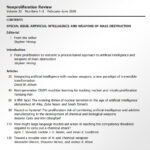 CNS flagship refereed journal pushes forward the emerging literature on AI and WMD.
 - Professor Stephen Herzog on CNS Courses and On-Campus Opportunities
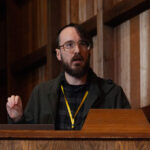 An interview with Professor Stephen Herzog on opportunities at Middlebury.
 - What Makes a Weapon Too Horrific to Use?
 Dr. Stephen Herzog and co-authors discuss why the U.S. public supports the use of some weapons but recoils at others.
 - NATO’s Nuclear Types: Vulnerability, Defense Investment, and Alliance Strategy Preferences
 Dr. Stephen Herzog and co-authors investigate the very different strategies that NATO member countries take while under the same U.S. nuclear umbrella.
 - Anticipatory Arms Control for the AI Age
 CNS researchers publish in Arms Control Today on why the Asilomar Process is needed for the new generation of AI and WMD restraint.
 - The Asilomar Principles for Governing AI Applications in Nuclear and Biological Security
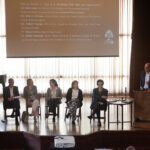 CNS releases principles for its landmark Asilomar Process, aiming for sustained cross-sector dialogue on early AI governance.
 - AI Is Changing Biological and Nuclear Risks; Governance Must Change Accordingly
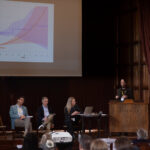 Bulletin of the Atomic Scientists publishes “Asilomar Principles for Governing AI Applications in Nuclear and Biological Security.”


