
Director, CBRN Security Program
[email protected]
Monterey, CA
831.647.6540
Areas of Research
- Nonproliferation education and training
- WMD Nonproliferation in Eurasia
- Nuclear and radiological security
Background
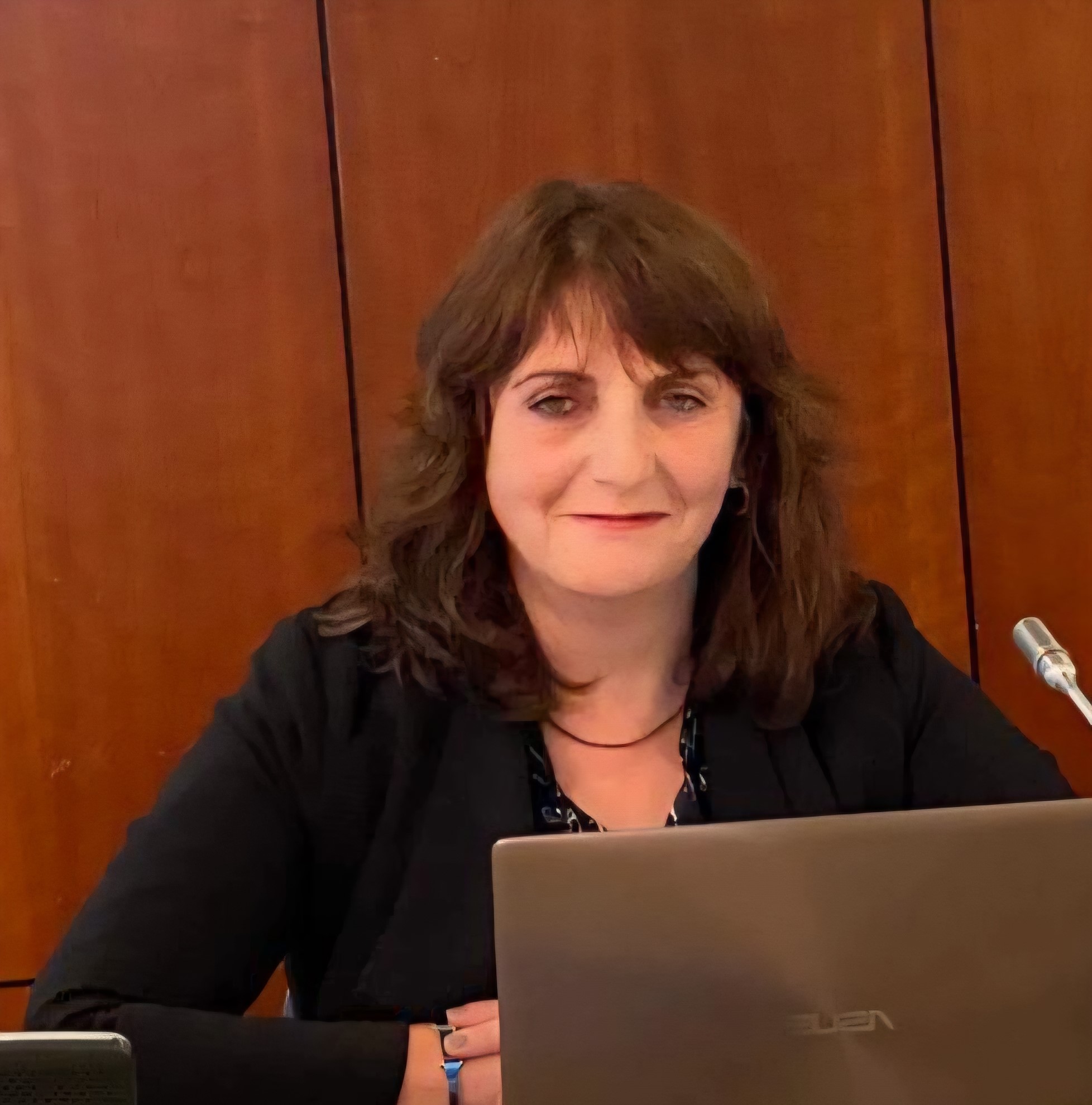
Margarita Kalinina-Pohl is the Director of the CBRN Security Program at the James Martin Center for Nonproliferation Studies (CNS) at the Middlebury Institute of International Studies at Monterey, California. During her nearly three decades at CNS, she has held a variety of research and management positions, including serving as manager of the Center’s regional office in Almaty, Kazakhstan, and manager of the CNS Visiting Fellows Program.
Her research focuses on nuclear and radiological security, nonproliferation education, capacity building, and international cooperation to address emerging security challenges. She has authored and co-authored various articles, reports, book chapters, and policy studies on nuclear and radiological security, nuclear energy developments and uranium tailings in Central Asia, and the legacy of Soviet nuclear activities.
Ms. Kalinina-Pohl’s recent work has focused on radiological security, including innovative methods for locating orphan radioactive sources and radioactive materials outside regulatory control. She co-authored the chapter “Open Source Intelligence and Investigative Techniques for Locating Radioactive Materials” in The Oxford Handbook of Nuclear Security (2023), which examines the use of open-source intelligence, satellite imagery, geospatial analysis, and social media to support efforts to locate and secure radioactive materials.
She is also a lead author of “Radiological Security in Contested Territories: The Successful Case of the Removal of Disused Radioactive Sources and Materials from Transdniestria” (2023), which analyzes the removal and secure disposition of radioactive sources from a contested territory and highlights the role of international cooperation in addressing radiological security risks.
Her publications on nuclear security and nonproliferation include “The Final Stretch: Tackling Remaining HEU Challenges” (2021), which examines ongoing efforts to minimize civilian commerce in highly enriched uranium and reduce proliferation risks.
In addition to her technical research, Ms. Kalinina-Pohl has contributed to scholarship on nuclear security culture and professional development. She is the lead author of “Lessons in Building Professional Networks During Times of Crisis and Their Impact on Nuclear Security Culture: The Case of the Black Sea Women in Nuclear Network” (2023), which explores the role of professional networks in strengthening security culture, advancing gender equity, and supporting nuclear professionals during periods of regional crisis.
Beyond her research activities, Ms. Kalinina-Pohl leads numerous international education, training, and mentorship initiatives. She is actively engaged in projects aimed at strengthening radiological security culture, developing the next generation of nuclear security professionals, and promoting women’s leadership in the nuclear field through regional and international professional networks. She founded two regional professional networks for nuclear professionals—the Black Sea Women in Nuclear (BSWN) Network and the Women in Nuclear Central Asia (WINCA) Network—dedicated to advancing professional development, regional cooperation, and women’s leadership in the nuclear field.
Margarita serves on the International Nuclear Security Forum Advisory Board, Advisory Board for the UK’s Nuclear Security Capacity Building Programme (NSCBP and represents her organization in the International Atomic Energy Agency (IAEA) International Nuclear Security Education Network (INSEN) and the Global Partnership Against the Spread of Weapons and Materials of Mass Destruction (GP).
Selected Publications
Kalinina-Pohl, M., and Duitsman, M. “Open Source Intelligence and Investigative Techniques for Locating Radioactive Materials.” In The Oxford Handbook of Nuclear Security (2023).
Kalinina-Pohl, M., Lazarev, A., Pomper, M., Moore, G., and Kendall, E. “Radiological Security in Contested Territories: The Successful Case of the Removal of Disused Radioactive Sources and Materials from Transdniestria.” CNS Occasional Paper No. 57 (2023).
Kalinina-Pohl, M., Homan, Z., Martin, O., et al. “Lessons in Building Professional Networks During Times of Crisis and Their Impact on Nuclear Security Culture: The Case of the Black Sea Women in Nuclear Network.” International Journal of Nuclear Security (2023).
Pomper, M., Dalnoki-Veress, F., Kalinina-Pohl, M., and Lazarev, A. “The Final Stretch: Tackling Remaining HEU Challenges.” CNS Occasional Paper No. 51 (2021).
Kalinina-Pohl, M., Duitsman, M., and Balan, I. “Radioactive Investigators: Recovering Orphan Radioactive Sources with Innovative Methods and New Tools.” Nuclear Threat Initiative (2020).
Kalinina-Pohl, Margarita. “It’s Not Radioactive Disneyland: Visit Chernobyl, but Respect It.” Bulletin of the Atomic Scientists, April 26, 2021.
Parada, Francisco, Margarita Kalinina-Pohl, and Miles A. Pomper. “Radioactive Material Is Still Missing in Malaysia: Cause for Concern?” Bulletin of the Atomic Scientists, September 14, 2018
Humphrey, Paula, and Margarita Sevcik. Uranium Tailings in Central Asia: The Case of the Kyrgyz Republic. Washington, DC: Nuclear Threat Initiative, 2009.
Sevcik, Margarita. “Uranium Tailings in Kyrgyzstan: Catalyst for Cooperation and Confidence Building?” The Nonproliferation Review 10, no. 1 (2003): 147–154.
CNS Work
- Building the Next Generation of Radiological Security Professionals
 CNS, in cooperation with PNNL, hosted a pilot course on radiological security for 26 graduate students and early- to mid-career professionals.
 - CNS Experts Observe the International Day Against Nuclear Tests by Raising Awareness about Humanitarian Impacts of Nuclear Tests and Nuclear Weapons
 CNS experts commemorate the day with an interview with The Astana Times and a webinar with a hibakusha.
 - Putin’s War with Ukraine: Voices of CNS Experts on the Russian Invasion
 A compendium of CNS expert analysis and commentary on the nuclear ramifications of the war, as well as educational materials for expert and general audience.
 - OP#57: Radiological Security in Contested Territories
 One of the few success stories in the elimination of radioactive sources from a contested territory is the Republic of Moldova’s removal of approximately 2,700 disused radioactive materials from the breakaway region of Transdniestria.
 - US-Black Sea Nonproliferation Professionals Exchange: US Module
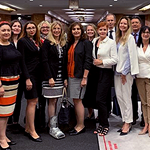 Participants from six countries fostered ties between US and Black Sea technical and policy communities with tours of both of the National Laboratories, nuclear science museums, and Washington DC.
 - CNS Supports Radioactive Source Users in Central Asia and Azerbaijan in Improving Security Culture
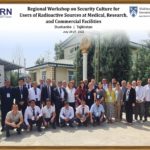 CNS completed a year-long project to increase radiological security culture awareness in Central Asia and Azerbaijan.
 - CNS Launches the US-Black Sea Nonproliferation Exchange Initiative
 The initiative will serve as a channel for a deeper coordination and support between nonproliferation professionals including scholars/researchers and diplomats/practitioners.
 - CNS Visiting Fellows Participate in the Washington Pilot Project
 Mid-career experts learned from D.C. based experts from the Department of State, Department of Energy, Nuclear Threat Initiative (NTI), CNS, Arms Control Association and the National Academy of Sciences.
 - ICONS 2020
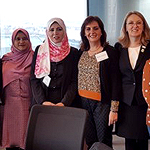 A large and visible cohort of CNS experts and alumni demonstrate the efficacy of civil society in the nuclear security field.
 - Radioactive Material is Still Missing in Malaysia: Cause for Concern?
 This material could be used to build a radiological dispersal device (RDD), commonly known as a “dirty bomb.”


