
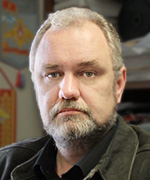
 Senior Fellow
[email protected]
Vienna, Austria
Background
Beginning in 1981, Dr. Nikolai Sokov worked at the Institute of US and Canadian Studies and the Institute of World Economy and International Relations in Moscow. From 1987-92 he worked at the Ministry for Foreign Affairs of the Soviet Union and later Russia, and participated in START I and START II negotiations as well as in a number of summit and ministerial meetings.
He has been invited to speak at numerous conferences and provide briefings to many organizations and governmental agencies, including:
- US Department of State
- US Department of Defense
- US Department of Energy
- Various committees of US Congress
- US national laboratories
- UK Defense Academy
- International Institute for Strategic Studies
- Fondation pour la Recherche Strategique
- Tomsk Polytechnical University
Education
Dr. Nikolai N. Sokov has a PhD from the University of Michigan (1996) and (the Soviet equivalent of a PhD) Candidate of Historical Sciences degree from the Institute of World Economy and International Relations (1986). He graduated from Moscow State University in 1981.
CNS Work
- Why Russia Calls a Limited Nuclear Strike “De-escalation”
 If Russia were faced with a large-scale conventional attack that exceeded its capacity for defense, it might respond with a limited nuclear strike.
 - Russia and the INF Treaty: An Alternative Interpretation
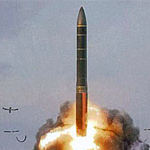 Some allege Russia is violating the INF Treaty. Other explanations deserve consideration, according to Senior Fellow Nikolai Sokov.
 - The New US Plans for Missile Defense: Enough to Reinvigorate US-Russian Arms Control?
 A decision to cancel a controversial interceptor is unlikely to overcome the missile defense obstacles that have stalled US-Russian arms control.
 - Critical Questions: Urgent Decisions for the Second Obama Administration
 CNS experts propose nonproliferation and disarmament priorities.
 - NATO-Russia Disputes and Cooperation on Missile Defense
 As the 2012 NATO Summit draws near, the lack of agreement between the Alliance and Russia stands in contrast to the promise of the last summit in 2010.
 - Medvedev’s Statement on Missile Defense Might Postpone Russia Dialogue Until 2013
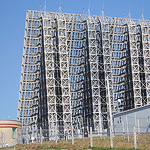 Medvedev’s statement on military responses to missile defense sounds more threatening than it actually is.
 - A Second Sighting of Russian Tactical Nukes in Kaliningrad
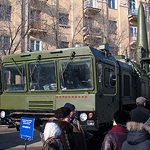 Russian tactical nuclear weapons appear with some regularity in Kaliningrad oblast.
 - As New START Enters into Force, Negotiations Are More Challenging
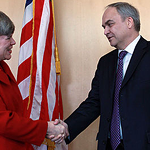 US and Russia find that setting the agenda is an almost insurmountable obstacle.
 - New START Ratification in Russia
 Apparent smooth sailing obscures submerged drama and revelations.
 - New START Ratification: A Bittersweet Success
 Concessions made to win approval challenge Obama’s nonproliferation agenda.
Bibliography
Dr. Nikolai N. Sokov is the author or co-author of several monographs, including:
- Delegitimizing Nuclear Weapons: Examining the Validity of Nuclear Deterrence (2010)
- Reducing and Regulating Tactical (Nonstrategic) Nuclear Weapons in Europe (2009)
- Engaging China and Russia on Nuclear Disarmament (2009)
- Evolution of Nuclear Strategy in U.S. and Russia and its Implications for Arms Control (2003)
- Tactical Nuclear Weapons: Options for Control (2000)
- Russian Strategic Modernization: Past and Future (2000)
- Russian Policy Toward the Baltics: What the West Can Expect and What It Could Do (1999)
He is also co-author and co-editor of the first Russian-language college-level textbook on nuclear nonproliferation (Yadernoe Nerasprostranenie, Vol.I-II, PIR Center, 1st edition 2000, 2nd edition 2002).


